

Why roof drainage matters in Greene, NY
Good roof drainage moves rain, melting snow, and ice away from the roof structure, exterior walls, foundation, and walkways. A roof can be covered with sound shingles and still develop serious problems if water is allowed to collect or discharge too close to the house.
Local homes must handle several types of weather throughout the year. Heavy summer rain can overwhelm undersized gutters, while autumn leaves can block outlets before winter arrives. Snowmelt and freeze-thaw cycles can also expose weak points in gutters, downspouts, flashing, and foundation drainage.
Effective drainage is not only about installing gutters. It is a complete path that carries water from the roof edge to a safe discharge area.
How should gutters and downspouts be arranged?
Gutters should collect water from the roof without sagging, overflowing, or holding standing water. Downspouts should then carry that water continuously to a location where it will not damage the building or neighboring property.
A reliable arrangement usually includes:
- Gutters with a continuous slope toward each outlet
- Enough downspouts for the roof area and local rainfall intensity
- Secure hangers that can resist wind, ice, and seasonal movement
- Elbows and extensions that direct water away from the foundation
- Watertight seams and properly fitted end caps
- Clear outlets without leaf buildup or compacted debris
Gutters do not need to look perfectly level from the ground, but they should not have low spots where water remains after a storm. Standing water adds weight, encourages corrosion, and may freeze into damaging ice during cold weather.
The New York State plumbing code includes minimum slope requirements for certain roof gutter and rainwater collection systems. Actual sizing should also account for roof area, roof pitch, gutter layout, and local rainfall conditions.
Where should downspouts discharge?
Downspouts should release water far enough from the foundation that it cannot flow back toward the basement or crawl space. In many situations, a downspout extension that carries water several feet away from the wall is more useful than a short outlet that ends directly beside the foundation.
The discharge area should:
- Slope away from the building
- Avoid eroding soil near footings
- Stay clear of basement window wells and stairwells
- Avoid creating ice on walkways, driveways, or steps
- Not direct water toward a neighboring lot
- Remain accessible for inspection and seasonal maintenance
A splash block can spread water across the surface, but it is not always enough on steep or compacted ground. Buried drainage lines, daylight outlets, or carefully graded swales may be appropriate in some yards, but underground systems can clog or freeze if they are poorly designed.
Water should never be directed into a foundation wall, onto an area that regularly freezes, or toward a location where it can undermine soil around the house.
How can roof drainage handle snow and ice?
Snow and ice place extra stress on roof edges and gutters. Snow sliding from a steep roof can pull gutters loose, bend downspouts, or damage lower roof sections. Ice can also form when melting snow refreezes at the eaves.
Roof drainage performs better in winter when:
- Gutters are firmly attached to the fascia or roof structure
- Downspouts are securely fastened and free of obstructions
- Discharge points do not create icy walking surfaces
- Roof-edge ventilation and insulation are functioning properly
- Water is not allowed to back up beneath the roof covering
- Heavy snow is not removed casually from the roof
Ice dams are often misunderstood. They are not caused simply by having gutters. They develop when heat escapes into the roof area, melts snow on the warmer upper roof, and allows water to refreeze near the colder eaves. Improving attic air sealing and insulation may help, but blocked gutters can make the resulting water damage worse.
Removing roof snow or ice can be dangerous and may damage shingles, flashing, and gutters. Walking on an icy roof is hazardous and should not be attempted by untrained occupants.
How often should roof drainage be inspected?
Most homes benefit from checking the drainage system at least twice a year: once after leaves have fallen and again before the heavier spring runoff period. Additional checks are sensible after major storms, high winds, or rapid snowmelt.
Look for:
- Gutter sections pulling away from the building
- Sagging or reverse-sloped areas
- Rust, cracks, separated seams, or loose end caps
- Water stains below the roof edge
- Overflow marks on siding
- Soil erosion near downspout outlets
- Basement dampness that appears after rain
- Plants or moss growing in gutters
- Downspouts that stop above the ground
- Water pooling near porches, additions, or foundation walls
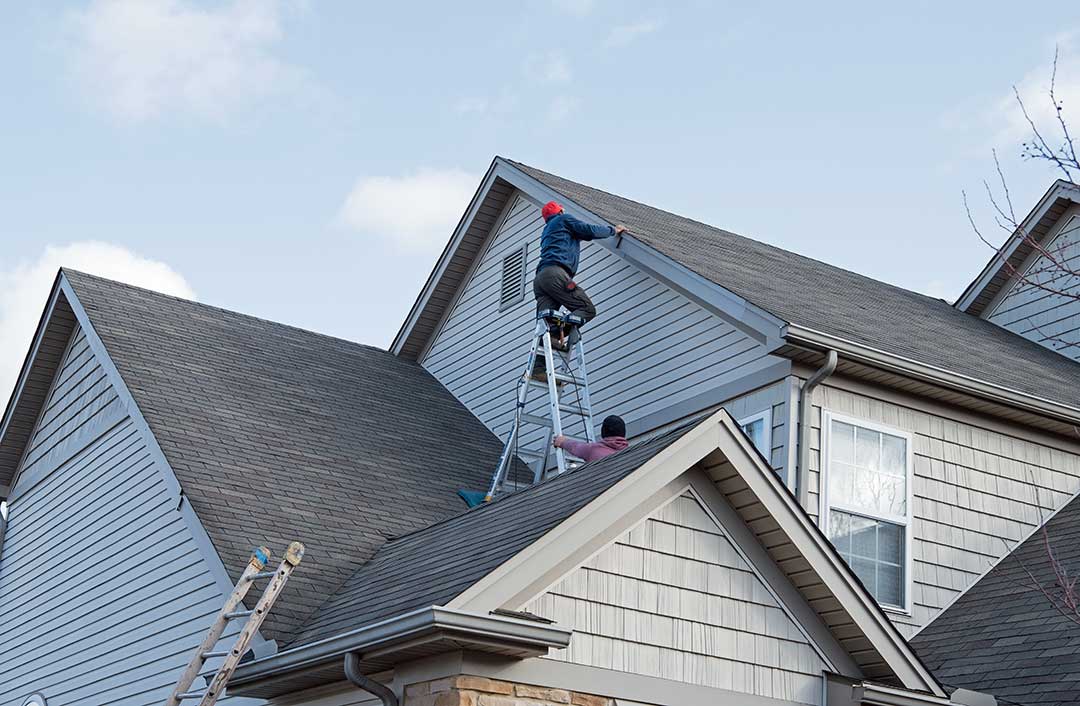
A practical inspection can begin from the ground. During a light rain, observe whether water flows smoothly through the gutters and exits at the intended locations. A garden hose can also help identify blockages, although water should not be sprayed under shingles or into roof penetrations.
Are gutter guards a complete solution?
No. Gutter guards can reduce the amount of leaves and larger debris entering a gutter, but they do not eliminate maintenance. Pine needles, roof granules, seeds, and fine organic material can collect on top of or beneath some guard designs.
Gutter guards may also affect how water enters the system during intense rainfall. If the surface becomes covered with debris, water can spill over the edge instead of entering the gutter.
Any protective screen or cover should be checked for:
- Debris buildup
- Loose sections
- Gaps at corners and valleys
- Overflow during heavy rain
- Snow or ice damage
- Difficult access for cleaning
The drainage system still needs periodic observation even when guards are installed.
What roof areas are commonly overlooked?
Roof valleys, dormers, porches, garages, additions, and areas where two roof sections meet often receive concentrated water. These locations may need larger gutters, additional outlets, wider flashing, or more carefully planned downspout placement.
A valley can deliver water at a much greater rate than a straight roof edge. If the gutter below it is too small, poorly sloped, or obstructed, overflow may stain siding and damage trim.
Small roof sections over doors and walkways also deserve attention. Water that falls from an un-guttered edge can create slippery surfaces, splash mud onto siding, or freeze where people enter and leave the home.
Flat or low-slope roof areas require particular care because they cannot rely on gravity as quickly as steep roofs. Drains, scuppers, overflow openings, and interior piping must remain clear. Ponding water that remains after a storm may indicate a drainage or structural problem rather than a normal condition.
What signs indicate a drainage problem?
The clearest warning signs are recurring water stains, overflowing gutters, damp foundation walls, peeling exterior paint, and soil washed away near the house. A musty basement after rain may also point to roof water being discharged too close to the foundation.
Inside the attic, inspect for darkened wood, damp insulation, mold-like growth, or water marks near eaves and valleys. These symptoms can have several causes, including roof leaks, condensation, ice dams, or inadequate ventilation.
If a gutter is detached, a roof edge is sagging, electrical equipment is near flowing water, or a roof must be accessed during snow or ice, safety takes priority. Those conditions may require qualified inspection because temporary repairs from a ladder or icy roof can create greater damage or personal injury.
How does proper drainage protect the whole property?
A well-planned system reduces the chance that roof water will damage shingles, sheathing, fascia, siding, insulation, foundations, landscaping, and paved surfaces. It also limits standing water that can freeze and expand during Greene winters.
The most dependable approach is to inspect the entire route: roof surface, valleys, flashing, gutters, downspouts, extensions, soil grade, and final discharge area. Each part must work with the next. A clean gutter cannot compensate for a downspout that empties against the foundation, and a long extension cannot correct a gutter that is collapsing or holding water.
