
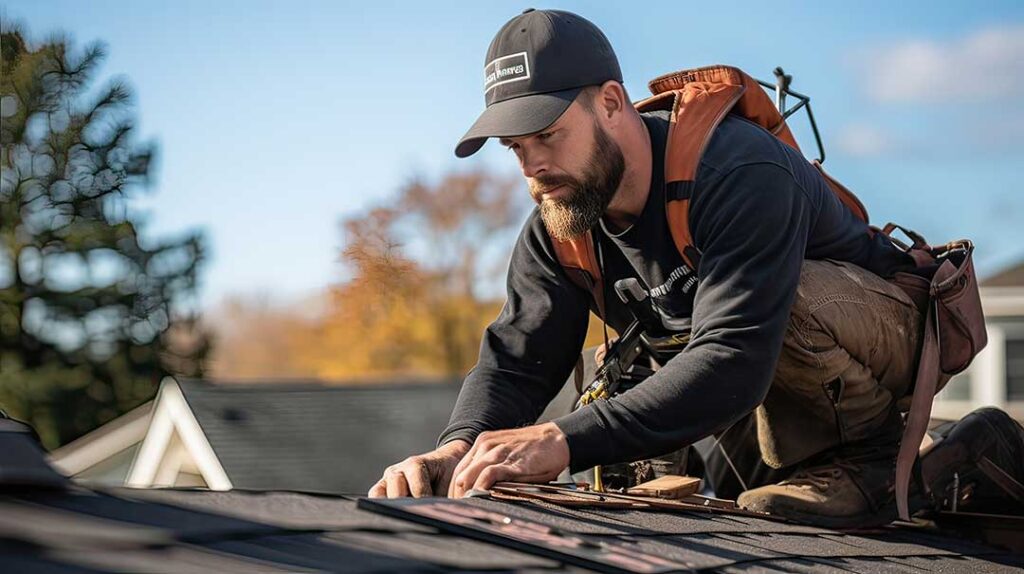
Why fall is the right time to inspect a roof
Fall is a useful maintenance window for homeowners in Greene, NY because the roof can be checked before regular freezing temperatures, snow, and ice make defects harder to see or repair. Leaves, wind, rain, and temperature changes can expose weak areas that may become more serious during winter.
A fall inspection does not require climbing onto the roof. Many conditions can be identified safely from the ground, attic, upper windows, or a ladder positioned only for gutter access. Roof surfaces become slippery quickly in cool, damp weather, so avoid walking on shingles after rain, frost, or leaf accumulation.
The goal is to find and address small problems before winter weather adds stress to the roofing system.
What should homeowners look for from the ground?
Start with a slow visual check around the entire house. Binoculars can help identify damaged materials without requiring roof access.
Look for:
- Shingles that are missing, cracked, curled, lifted, or noticeably darker than surrounding shingles
- Exposed or rusting metal around chimneys, plumbing vents, valleys, and roof edges
- Sagging areas along the roofline
- Loose fascia, soffit, or trim
- Daylight visible through roof edges or overhangs
- Granules collecting heavily near downspouts
- Branches resting on the roof or rubbing against shingles
- Moss or leaves holding moisture against the roof surface
A few scattered granules in a gutter are not always a sign of immediate failure, especially on a newer asphalt roof. However, large amounts of granule loss, bald-looking shingle areas, or repeated deposits after storms deserve closer attention.
Sagging is more concerning than ordinary surface wear. It can indicate moisture damage, weakened framing, or excessive loading and should not be ignored.
How should gutters and downspouts be prepared?
Gutters should be cleared after most leaves have fallen and checked again if trees near the house continue dropping debris. Blocked gutters can cause water to back up beneath roof edges, soak fascia boards, and overflow near foundations.
While cleaning, check whether:
- Gutters are pulling away from the house
- Seams or end caps are leaking
- Downspouts are crushed or disconnected
- Water can flow freely through elbows
- Extensions direct water away from the foundation
- Roof valleys are packed with leaves or small branches
Downspouts should discharge water far enough away from the foundation to prevent pooling. In colder weather, standing water can freeze and contribute to damage around the foundation, walkways, and lower portions of the exterior.
Do not rely on gutter guards as a complete maintenance solution. They can reduce debris but still need inspection because leaves, pine needles, and roof granules may collect on or beneath them.
What roof areas are easy to overlook?
Roof penetrations and transition points often deserve more attention than the middle of a shingle field. These include chimneys, skylights, plumbing vents, dormers, roof-to-wall intersections, and valleys.
Check for:
- Cracked or missing sealant
- Loose flashing
- Rust holes
- Open joints
- Stains below penetrations
- Shingles that are lifting near valleys or roof edges
Flashing is designed to direct water away from vulnerable joints. Applying caulk over damaged flashing may hide a symptom temporarily without correcting the underlying problem. Avoid covering vents or sealing over areas that are intended to drain.
Roof valleys collect water, leaves, and ice-melt runoff. They should remain open and free of debris. Removing leaves with a soft brush or leaf blower from a safe location is preferable to scraping shingles with a hard tool.
How can homeowners check the attic?
An attic inspection can reveal roof problems before they appear on ceilings or walls. Use a flashlight and look at the underside of the roof deck, especially after rainfall.
Warning signs include:
- Dark stains or water marks
- Damp insulation
- Mold-like growth
- Rusted nails
- Wet or compressed insulation
- Daylight entering around roof penetrations
- Frost on the underside of the roof deck during cold weather

Also check whether attic insulation blocks soffit vents. A roof ventilation system needs both intake and exhaust airflow. Blocked intake vents can contribute to moisture buildup and uneven roof temperatures.
A bathroom fan or dryer should not discharge into the attic. Moist indoor air entering a cold attic can condense on roof framing and insulation, creating problems that may be mistaken for a roof leak.
Does fall maintenance help prevent ice dams?
Fall maintenance can reduce the conditions that contribute to ice dams, but it cannot guarantee that ice dams will not form. Ice dams develop when snow melts on warmer roof sections, flows toward colder eaves, and refreezes.
Helpful preventive steps include:
- Keeping gutters and downspouts clear
- Improving attic insulation where heat loss is evident
- Maintaining clear soffit and ridge ventilation
- Sealing major air leaks between the living area and attic
- Checking for uneven roof temperatures or recurring winter leaks
- Removing overhanging branches that can add snow, ice, or impact risk
Ice dams are usually an attic air-sealing and insulation concern as much as a gutter concern. Gutters do not cause every ice dam, and cleaning them alone may not solve repeated winter problems.
Never chop an ice dam with an axe, shovel, or other sharp tool. That can damage shingles and underlayment. Do not climb onto an icy roof to remove snow.
When is roof work unsafe to do personally?
Roof maintenance should stop when conditions are wet, icy, windy, steep, or difficult to access. Fall leaves can hide weak shingles, and ladders can shift on damp ground. Power lines, chimneys, skylights, and steep roof sections create additional hazards.
Use ground-level inspection whenever possible. If a ladder is used for gutter work, place it on stable, level ground and keep three points of contact. Never carry heavy tools while climbing.
Professional evaluation is warranted when there is structural sagging, active leaking, extensive storm damage, suspected electrical danger, or a roof section that cannot be reached safely. Safety concerns are more significant than completing a seasonal checklist.
Are permits needed for roofing work in Greene?
Routine cleaning and visual inspection generally do not involve a roofing permit. Roof replacement and roof recovery work, however, may require approval under local enforcement requirements. Property owners should verify current requirements with the appropriate building or code office before roofing work begins.
This matters particularly for older homes, additions, detached structures, and projects involving changes to roof layers, ventilation, structural framing, or drainage. Keeping permit records and repair documentation can also help clarify the roof’s history for future maintenance.
What should be recorded after the inspection?
Keep a simple fall roof record with the inspection date, observed conditions, photographs, and any repairs completed. Note areas that should be checked again after the first major snowfall or strong wind event.
A useful record includes:
- Approximate roof age
- Shingle or roofing material type
- Locations of past leaks
- Gutter and downspout condition
- Attic moisture or ventilation concerns
- Areas affected by falling branches
- Dates of repairs or roof work
Regular observations make it easier to distinguish new damage from older staining. In a climate with repeated freeze-thaw cycles, that history can help identify whether a problem is related to surface aging, drainage, attic moisture, or winter movement.
