
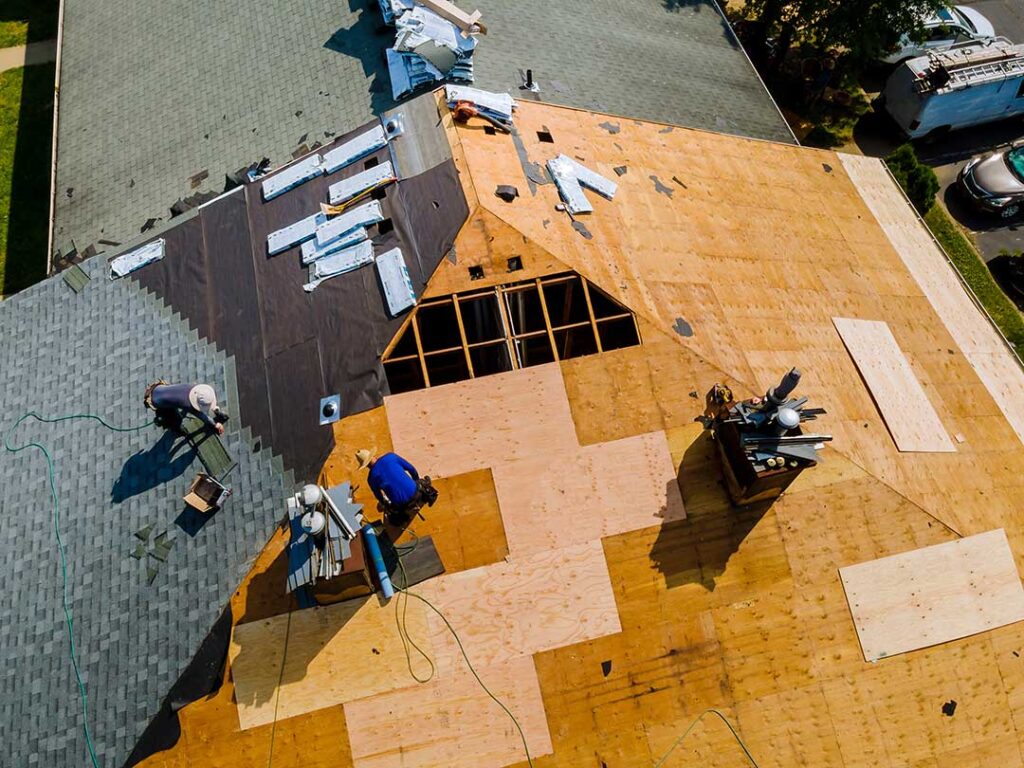
Ice dams are ridges of ice that form along a roof’s lower edge when melting snow refreezes before it can drain away. In Greene, NY, repeated freeze-thaw cycles, snow-covered roofs, and uneven attic temperatures can create the conditions that allow ice dams to develop.
What causes an ice dam?
An ice dam forms when different sections of a roof are at different temperatures.
Snow on a warmer upper section of the roof begins to melt. The water flows downward beneath the snow until it reaches a colder roof edge, overhang, or gutter area. There, the water freezes and creates a ridge of ice. Additional meltwater can collect behind that ridge instead of draining away.
The basic process usually involves three factors:
- Snow cover that insulates the roof surface
- Heat escaping from the living space into the attic
- Cold roof edges that remain below freezing
Ice dams are more likely after a heavy snowfall followed by sunny conditions or a brief warming trend. The upper roof may warm enough to melt snow while the shaded lower edge remains frozen.
Why are ice dams a concern?
The ice itself is not always the main problem. The greater concern is trapped water that may work beneath roofing materials or enter small gaps around roof penetrations, flashing, and underlayment.
Possible consequences include:
- Water stains on ceilings or upper walls
- Damp attic insulation
- Peeling paint or damaged drywall
- Wet roof sheathing or rafters
- Mold growth when materials remain damp
- Damaged gutters, downspouts, or fascia
- Leaks around chimneys, skylights, vents, and wall intersections
An ice dam does not guarantee that a roof will leak. A properly installed roof assembly may resist water intrusion for some time. However, standing water along the roof edge places more pressure on vulnerable areas than ordinary snowmelt does.
How can homeowners recognize an ice dam?
The most visible sign is a continuous ridge of ice along the lower edge of the roof. Icicles may also appear, although icicles alone do not prove that an ice dam is present.
Other warning signs include:
- Water dripping from a ceiling or upper-floor wall during a thaw
- Dark or wet areas on attic insulation
- Snow melting in patches across an otherwise snow-covered roof
- Ice buildup around gutters or at roof valleys
- Stains near exterior walls, skylights, or ceiling corners
- Gutters pulling away from the roof edge under the weight of ice
Uneven snowmelt deserves attention. If bare roof areas appear above thick snow near the eaves, heat may be escaping through the roof system. This does not always mean an ice dam will form, but it indicates that attic temperature control may be uneven.
What is the most effective way to prevent ice dams?
The most reliable prevention strategy is to keep the roof surface consistently cold by controlling heat loss and maintaining balanced ventilation. Removing snow can reduce the immediate risk, but it does not correct the underlying cause.
Seal air leaks between the home and attic
Warm indoor air can enter the attic through gaps around:
- Attic access panels
- Recessed light fixtures
- Plumbing and electrical penetrations
- Chimneys and flues
- Ceiling fixtures
- Ductwork
- Partition walls
Air sealing should be done with materials appropriate for the location and nearby heat sources. Certain fixtures and chimneys require specific clearances and fire-safe methods. Improperly sealing around heat-producing equipment can create a hazard.
Add or improve attic insulation
Insulation slows the movement of heat from the living area into the attic. It should be installed evenly, without blocking ventilation channels at the roof edges.
Compressed, displaced, or damp insulation may not perform as intended. Areas near attic access openings and exterior walls commonly have thinner coverage than the rest of the attic.
Maintain balanced roof ventilation
A properly designed ventilation system helps release heat and moisture from the attic. Typical components may include intake ventilation near the eaves and exhaust ventilation higher on the roof.
Ventilation works best when intake and exhaust are balanced. Adding only an upper exhaust vent may not solve the problem if fresh air cannot enter near the roof edges. Blocked soffit vents, insulation pushed into eaves, and poorly arranged modifications can interfere with airflow.
Keep gutters and downspouts clear
Clean gutters cannot prevent an ice dam caused by attic heat loss, but clear drainage paths can help meltwater leave the roof edge when conditions allow. Leaves, twigs, and compacted debris can cause water to back up and freeze more easily.
Downspouts should discharge water away from the foundation and remain open during seasonal weather changes. A frozen downspout can contribute to backup at the eaves.
Should snow be removed from the roof?
Removing snow can reduce the amount of water available to form an ice dam, especially after a heavy storm. However, roof snow removal can be dangerous and can damage shingles, flashing, gutters, or the roof surface if performed with unsuitable tools.
Homeowners should avoid climbing onto a snow-covered roof. Walking on icy surfaces, using ladders in winter conditions, or pulling heavily frozen material from the roof can lead to serious injury.
If snow must be removed, the safest approach depends on the roof’s design, height, pitch, surface, and surrounding conditions. Snow should not be chipped away with sharp tools. Breaking apart an ice dam can damage roofing materials and may cause a sudden release of ice or water.
Do heated cables solve ice dam problems?
Roof-edge heating cables can create narrow drainage channels through ice, but they do not address heat escaping into the attic. They may provide temporary assistance in specific locations, yet they must be installed and used according to electrical and manufacturer requirements.
Poorly installed cables may create electrical, fire, or roof-damage risks. They also may not protect valleys, areas around chimneys, or other vulnerable sections. Heated cables should be viewed as a limited control measure rather than a substitute for air sealing, insulation, and ventilation.
What should be done if an ice dam is already leaking?
If water is entering the home, protect furnishings and flooring, place containers beneath active drips, and move electrical devices away from wet areas. If water is near light fixtures or electrical wiring, shut off power to the affected area only if doing so is safe.
Do not climb onto the roof to remove the ice. Do not use salt or corrosive chemicals on roofing, gutters, plants, or exterior surfaces. Rock salt and similar products can damage metal components and vegetation while failing to correct the source of the problem.
After the immediate leak is controlled, the affected attic, insulation, ceiling, and roof areas should be checked for hidden moisture. A small ceiling stain may represent a larger wet area above it.
How can ice dams be prevented before winter?
Preparation is most effective before snow arrives. Practical steps include:
- Checking attic insulation for thin or missing areas
- Looking for daylight or obvious air gaps around attic penetrations
- Confirming that soffit and roof vents are not blocked
- Cleaning gutters and downspouts before freezing weather
- Inspecting flashing around chimneys, skylights, and roof intersections
- Securing attic access covers and weatherstripping them when appropriate
- Reviewing previous leak locations for recurring patterns
Older homes, additions, converted attics, and roofs with multiple slopes may have more complicated heat-flow patterns. Past repairs can also leave gaps in insulation or ventilation that are not visible from the ground.
For Greene households, winter roof care is best approached as a combination of snow awareness, attic temperature control, drainage maintenance, and safe response during thaws. The goal is not simply to remove visible ice, but to prevent warm air from reaching the roof deck unevenly in the first place.
