
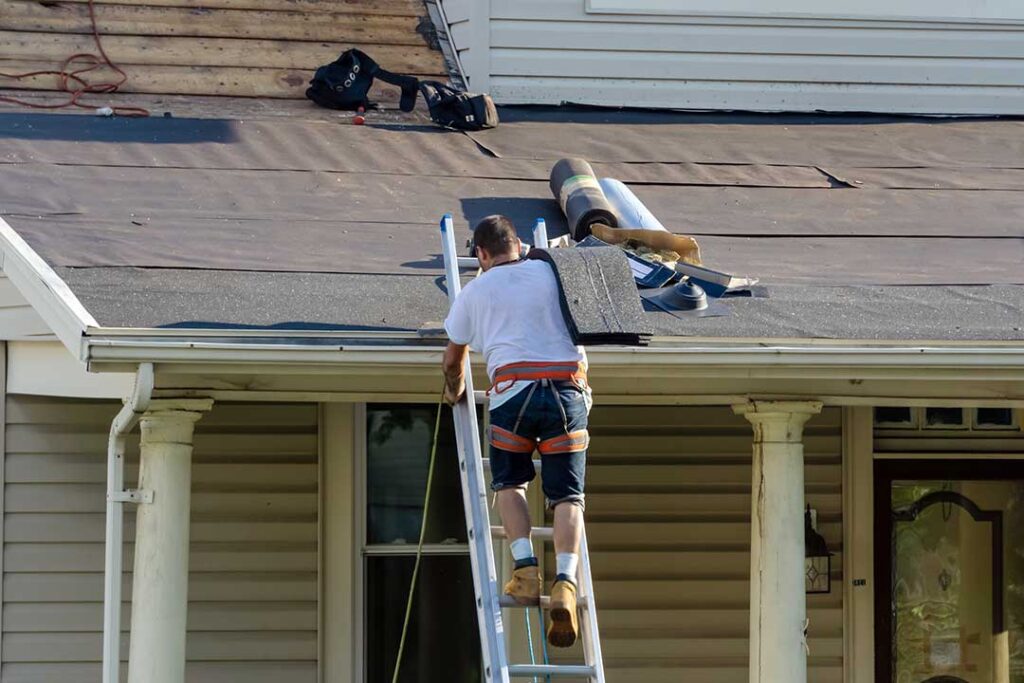
A roof leak is more than an interior nuisance. Water that enters through shingles, flashing, vents, valleys, or roof edges can gradually weaken the materials that hold a home together. In Greene, NY, seasonal snow, freezing temperatures, ice buildup, wind-driven rain, and repeated freeze-thaw cycles can make small roof problems more serious over time.
The visible drip may be limited to one room, but the moisture can travel along roof decking, rafters, insulation, ceilings, and wall cavities before it appears indoors.
What parts of a home can a leaking roof damage?
A leaking roof can affect the roof covering, roof deck, framing, insulation, ceilings, walls, and electrical components. The longer moisture remains, the greater the chance that repair will involve more than replacing a few roofing materials.
Commonly affected areas include:
- Roof decking: Plywood or oriented strand board beneath the roof covering can swell, soften, delaminate, or lose its ability to hold fasteners.
- Rafters and trusses: Repeated wetting can contribute to wood decay, especially where moisture becomes trapped and drying is limited.
- Ceiling materials: Plaster and drywall may stain, sag, crumble, or separate from fasteners.
- Wall framing: Water can move from the roof into wall cavities, damaging studs, top plates, insulation, and interior finishes.
- Insulation: Wet insulation loses effectiveness and may remain damp long after the visible leak stops.
- Roof edges: Fascia, soffits, and the ends of rafters can deteriorate when gutters overflow or ice dams force water behind the roof edge.
Structural damage does not always appear immediately. Wood may look sound on the surface while becoming soft underneath, particularly around roof penetrations, valleys, eaves, and areas where debris or insulation prevents drying.
How does water weaken roof framing?
Wood framing is strongest when it stays dry and properly connected. A leak can reduce that strength by causing decay, swelling, splitting, corrosion, or loosening around nails and screws.
A single brief leak may leave only a stain. A recurring leak can keep the same section of wood damp through multiple storms. Over time, fungi that cause wood decay may begin breaking down the material. This is more likely in poorly ventilated roof spaces, enclosed wall cavities, and roof edges where water collects.
Moisture can also cause roof decking to swell and shift. Once the decking changes shape, roofing fasteners may loosen, shingles may lift, and additional water may enter. This creates a cycle in which the original leak becomes a larger roof-system problem.
In older homes, previous repairs may conceal damaged decking or framing. A roof that appears intact from the ground can still have weakened areas beneath the surface.
Can a small roof leak cause major structural damage?
Yes. The size of the visible stain does not reliably show the extent of the damage.
Water often follows the underside of the roof deck or travels along framing before falling. A small ceiling mark may therefore be located several feet away from the actual entry point. A slow leak may also go unnoticed for months, allowing moisture to affect a larger area than a sudden, easily visible leak.
The risk increases when:
- The leak occurs near a valley, chimney, skylight, vent, or wall intersection
- Water enters around the roof edge or behind flashing
- Gutters overflow against fascia or siding
- Insulation blocks airflow and slows drying
- A roof space has poor ventilation
- Snow and ice repeatedly accumulate in the same area
- The home has already experienced previous water damage
A roof can continue carrying normal loads while hidden damage develops. Structural weakness may become more noticeable during heavy snow, strong wind, or repeated wet weather.
How do snow and ice make roof leaks worse?
Winter conditions can create both water intrusion and added structural load. Snow may melt on warmer sections of a roof and refreeze near colder eaves, forming an ice dam. The ice blocks normal drainage, allowing meltwater to move beneath roofing materials and into the roof assembly.
Ice dams are especially concerning at roof edges, where water can reach fascia, soffits, exterior walls, and ceiling areas. They may also conceal the original leak until staining or sagging becomes visible indoors.
Snow itself adds weight. Wind can concentrate snow in roof valleys, behind raised sections, near dormers, or next to other roof features. Wet snow and ice weigh more than light, dry snow. If a roof already has weakened decking or framing, additional loading can increase deflection or worsen an existing problem.
Warning signs of excessive roof stress include:
- New or increasing ceiling cracks
- Sagging ceilings or roof lines
- Doors that suddenly stick near an exterior wall
- Cracks where walls meet ceilings
- Popping or creaking sounds during heavy loading
- New leaks during or shortly after snowmelt
Do not climb onto an icy or snow-covered roof. Roof loading and structural concerns are hazardous to evaluate without proper equipment and experience.
What signs suggest that a leak has reached the structure?
Some warning signs are easy to see, while others are subtle. A water stain by itself does not prove that structural framing is damaged, but several signs together deserve prompt attention.
Look for:
- Soft, spongy, or sagging areas on the ceiling
- Brown, spreading, or repeatedly returning stains
- Bulging drywall or peeling ceiling layers
- Musty odors in attics, upper rooms, or closets
- Darkened or crumbly roof decking
- Rusted nails, metal connectors, or wiring components
- Damp insulation or compressed insulation around a leak
- Mold-like growth on wood, drywall, or insulation
- Exterior fascia or soffits that feel soft
- Shingles that are missing, lifted, curled, or covered with exposed underlayment
A ceiling that is actively bulging may contain trapped water and should not be punctured casually. Water near light fixtures, outlets, or wiring also presents an electrical hazard. If there is active dripping near electrical components, shut off power to the affected circuit only if it can be done safely and without entering standing water.
Can a roof leak damage walls and foundations?
Yes. Water entering near an eave, wall intersection, or roof-to-wall connection can move downward through framing and insulation. This may damage drywall, paint, trim, window openings, and structural members in the wall.
Roof water can also reach the base of exterior walls if gutters or downspouts are blocked, disconnected, or discharging too close to the house. Persistent wetting near the foundation may contribute to damp basements, soil erosion, settlement concerns, or deterioration of masonry and wood components.
New York’s property maintenance requirements call for roofs, flashing, gutters, and downspouts to be maintained so they do not admit rain or cause deterioration in walls and interior areas. That reflects a basic building principle: roof drainage is part of protecting the entire structure, not just the roof surface.
What should residents do after discovering a leak?
Start by limiting interior damage without taking unnecessary risks. Place containers beneath drips, move furniture and belongings away from the affected area, and photograph visible damage for household records. If ceiling materials are sagging, keep people away from the area.
From the ground, look for missing roofing materials, overflowing gutters, damaged flashing, or heavy ice buildup. Avoid walking on steep, wet, icy, or visibly damaged roof surfaces.
A temporary covering may reduce further water entry during an emergency, but it must be secured safely and should not replace a lasting repair. If there are signs of sagging, widespread decay, significant snow loading, cracked structural members, or movement in the roof or ceiling, evaluation by a qualified building or structural professional may be necessary before the area is used normally.
The most useful approach is to treat every leak as a moisture-management problem with possible structural consequences. Finding the entry point, allowing wet materials to dry, checking concealed areas, and correcting drainage or ventilation issues can prevent a minor roof defect from becoming damage to the roof deck, framing, walls, and ceilings.
