
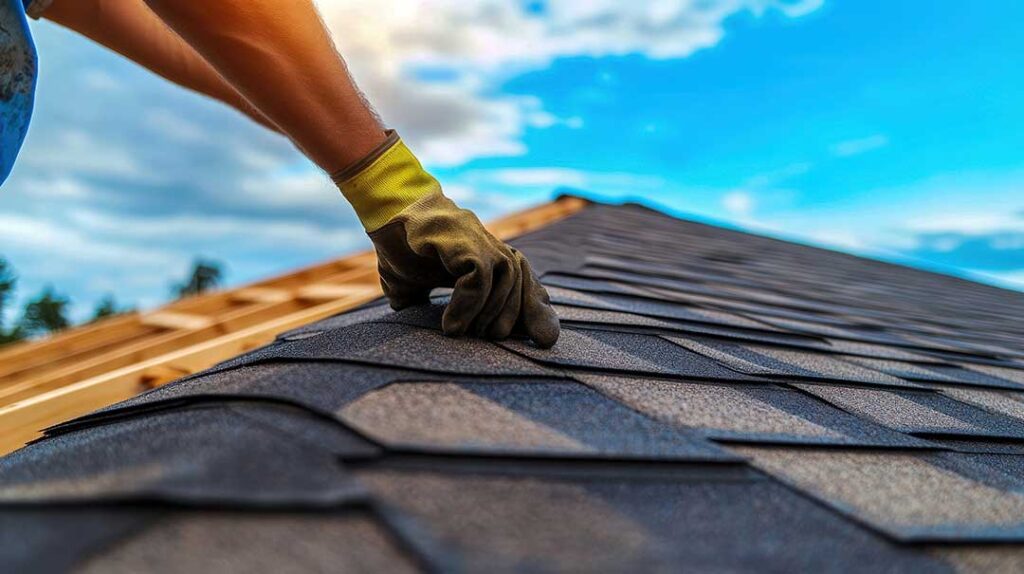
Roof debris can block drainage, hold moisture against shingles, damage gutters, and hide early signs of roof trouble. In Greene, NY, wind, heavy rain, fallen leaves, and winter weather can leave branches and organic material on roofs, especially near mature trees and older homes.
Removing light debris is often manageable from the ground or from a properly positioned ladder. Working directly on the roof requires more caution because wet shingles, steep slopes, frost, and hidden damage can make a simple cleanup hazardous.
What counts as roof debris?
Roof debris includes more than leaves. Common examples are:
- Fallen branches and twigs
- Pine needles and leaf buildup
- Acorns, seed pods, and small nuts
- Mud or sediment washed onto lower roof sections
- Moss, algae, and organic material
- Ice fragments or windblown material
- Small pieces of damaged shingles or flashing
A small amount of loose material is usually not an immediate emergency. The concern increases when debris collects in valleys, behind chimneys, around skylights, near roof edges, or inside gutters and downspouts.
Why should debris be removed?
Debris can create several problems if it remains in place. Wet leaves and needles hold moisture against roofing materials, which may speed the deterioration of shingles, underlayment, wood trim, and flashing. Organic buildup can also encourage moss growth, particularly on shaded roof sections that dry slowly after rain or snow.
Roof valleys deserve special attention because they direct water toward gutters and lower roof edges. If leaves or branches block those channels, water may back up beneath shingles or spill over the sides of the roof. Overflowing water can stain siding, erode soil near the foundation, and contribute to basement moisture.
Heavy branches create a separate risk. Even a branch that appears small can scratch shingles, crack a vent, damage flashing, or add concentrated weight to one section of the roof.
How can light debris be removed from the ground?
Ground-level removal is the safest starting point. Use a roof rake or a soft-bristled extension tool designed for roofs, and work from the edge of the roof rather than pulling debris downward from above.
Move the tool gently in the direction of the roof slope. Avoid sharp metal rakes, garden hoes, shovels, and other tools that can tear or puncture shingles. Do not scrape aggressively at granules, moss, or material that appears stuck to the roof.
A few practical guidelines help reduce damage:
- Stand well away from the roof edge and never work beneath a heavy branch.
- Pull debris away from people, windows, vehicles, and fragile landscaping.
- Do not drag large limbs across shingles.
- Stop if the tool catches, the roof surface looks loose, or material begins coming off with the debris.
- Check the ground afterward for broken shingles, nails, or pieces of flashing.
A roof rake can remove loose leaves and shallow snow from some roof types, but it should not be used forcefully. Removing every bit of snow is not always necessary, and aggressive raking can damage shingles.
What is the safest way to use a ladder?
A ladder should be placed on firm, level ground and kept clear of ice, mud, wet leaves, and soft soil. The ladder must extend high enough above the roof edge to provide a stable handhold. It should be secured against movement, and someone should remain nearby when conditions are uncertain.
Never rest a ladder against gutters alone. Gutters are not designed to support a person and may bend, pull loose, or collapse. Keep both hands available while climbing, and use a tool belt or bucket rather than carrying tools in your hands.
Do not use a ladder during strong wind, rain, freezing conditions, or when the ground is slippery. In Greene, changing autumn weather and freeze-thaw conditions can make a surface appear stable while remaining slick underneath.
Can debris be cleared by walking on the roof?
Walking on a roof is not necessary for ordinary loose debris and introduces avoidable risks. Shingles can be slippery even when they look dry, especially if covered with fine dust, pollen, algae, or moisture. Older roofs may also have brittle shingles that crack under foot pressure.
Avoid walking on roofs covered by frost, ice, snow, rain, moss, or loose granules. Steeper roofs, metal roofing, slate, clay tile, and roofs with fragile or uneven surfaces require particular caution. Skylights and roof sections over porches or additions may also be weaker than they appear.
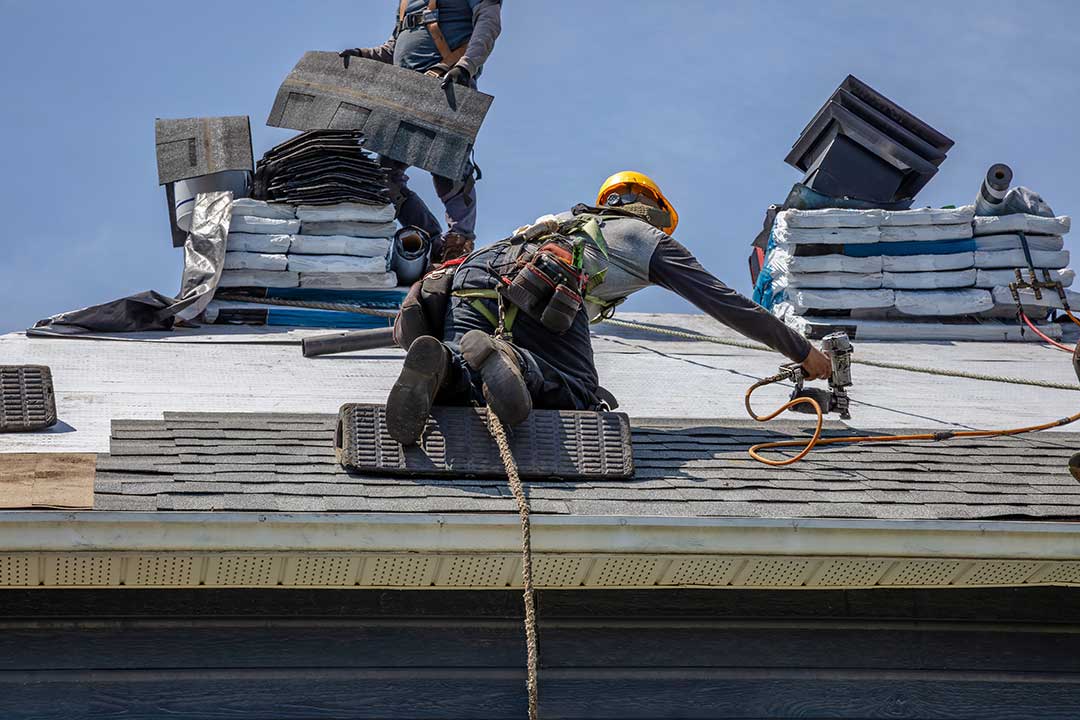
If a large limb is lodged in the roof, if the surface is visibly damaged, or if access requires walking across a steep or hazardous area, the safest choice is to stay off the roof. Emergency conditions may require qualified assistance, especially when electrical wires, structural damage, or unstable branches are involved.
How should gutters and downspouts be checked?
Roof debris frequently ends up in the gutter system. After clearing the roof, inspect gutters for compacted leaves, shingle granules, twigs, and standing water. A blockage near the downspout opening can cause water to overflow during the next storm.
Remove loose material by hand while wearing gloves, or use a small plastic scoop that will not damage the gutter. Flush downspouts with a garden hose only if the lower outlet is accessible and the system appears secure. If water backs up or leaks from a joint, the blockage may be deeper in the downspout.
Do not lean a ladder against the gutter. If gutter cleaning requires unstable positioning or extended work near the roof edge, it may not be a suitable do-it-yourself task.
What should be checked after a branch or storm?
Debris removal is also an opportunity to look for damage. From the ground, inspect for:
- Missing, lifted, or cracked shingles
- Exposed underlayment or wood
- Bent gutters or downspouts
- Damaged vents, flashing, or chimney caps
- Dents or punctures from branches
- Water stains on ceilings or upper walls
- Sagging roof lines or interior dripping
A roof leak may not appear directly below the damaged area. Water can travel along roof framing before entering the living space, so a stain near an exterior wall or ceiling corner should not be dismissed.
If a tree limb has struck the roof, keep people away from the area until the limb is stable and the structure can be assessed. Do not cut a tensioned branch or climb onto a damaged roof. Downed electrical wires require immediate distance and should never be approached.
How can future debris buildup be reduced?
Routine observation helps prevent a minor cleanup from becoming a repair problem. Inspect the roof and gutters after major windstorms and during the autumn leaf season. Homes surrounded by tall trees may need more frequent checks than homes in open areas.
Keep branches trimmed away from the roof when practical, while preserving safe clearance from utility lines. Clean leaves from roof-level areas where they collect naturally, but avoid pressure washing shingles or applying harsh chemicals without confirming that the roofing material can tolerate them.
Inside the home, watch for musty odors, fresh ceiling discoloration, peeling paint, or damp insulation near the attic. These signs can indicate that debris has blocked drainage or that a damaged roof component is allowing moisture inside.
A careful approach is simple: remove loose material from the ground when possible, avoid tools and conditions that can damage roofing, and treat branches, ice, steep slopes, and visible structural problems as hazards rather than routine cleanup.
